
Maker Spotlight: BScott Ceramics
- Aug 31, 2016
- 4 min read
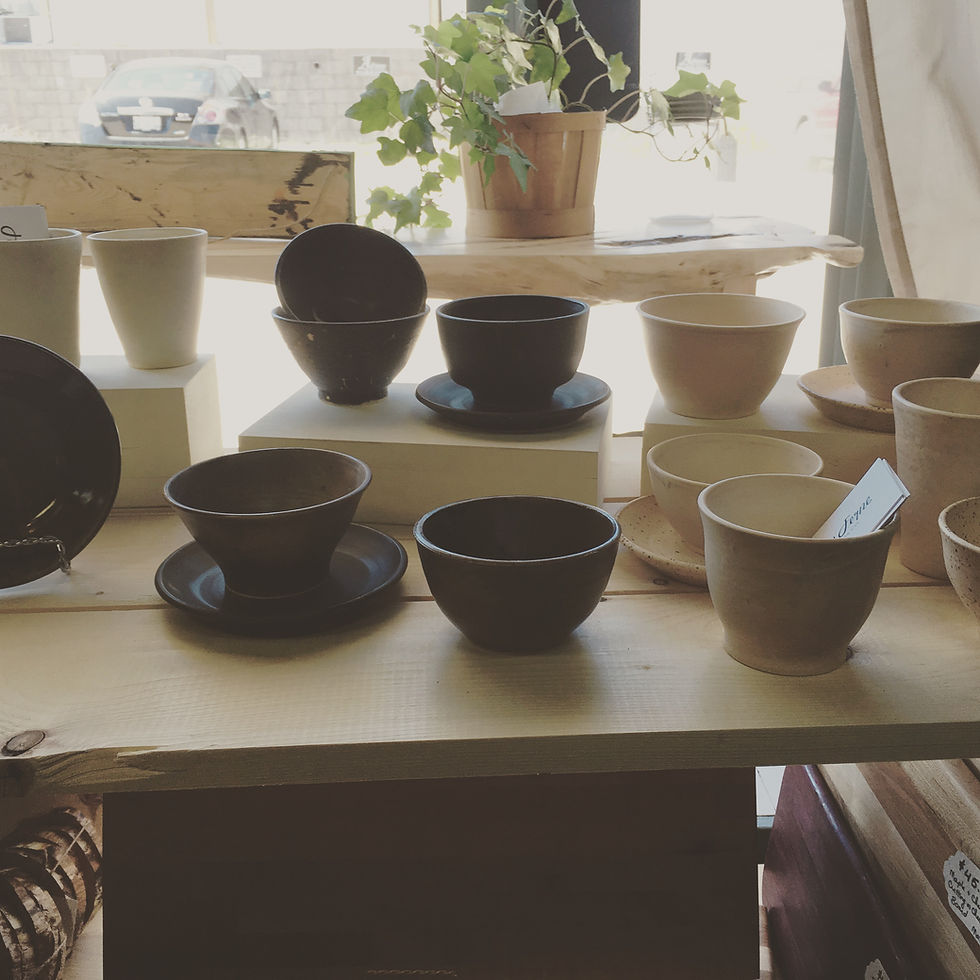
I must admit, I am in love with pottery. I love the timelessness of the craft, the various interpretations + styles, as well as it's practical ancient origins. If you'll remember, the craft I personally explore is weaving which, like pottery, has ancestral roots in being beautiful but also necessary. What I adore about Bethany's work is the return to pottery's organic style. It reminds me of traditional pieces that have been pulled from the earth after centuries. Her simple lines + muted palette speak to me. I daydream about having a kitchen full of her work, believing that preparing, serving + eating out of her dishes will make this daily routine a calming ritual.
I also intrinsically believe that pottery is meant to be passed through family generations or to friends. When my grandparents downsized, I was the lucky one to inherit a beautiful textured collection called Terra that had been passed on to them by a cousin on the east coast. I see Bethany's work being passed through family hands too. Her style is timeless + her pieces meant to be used daily, becoming infused with memory + meaning. So without further ado, let's delve deeper in Bethany's own journey with pottery.

1. When did you first learn about your trade? How did you get to where you are now?
My grandfather was a potter. He immigrated to Canada from the Netherlands, therefore, I always called him Opa. He worked in construction + farmed. I remember he had the large rugged looking hands of a hard worker. It was the same with his pottery. It was rustic + wobbly but it had a great spirit to it. In 2007, I attended Emily Carr University for painting. In my second year I took my first ceramics class. The first time I touched the clay I knew that this was going to be my discipline + craft. My Opa passed away a few years ago but I keep his coveralls in my studio as a reminder that craftsmanship is not just something that is taught, it is also a spirit that is passed down.
2. What do you love about Orillia?
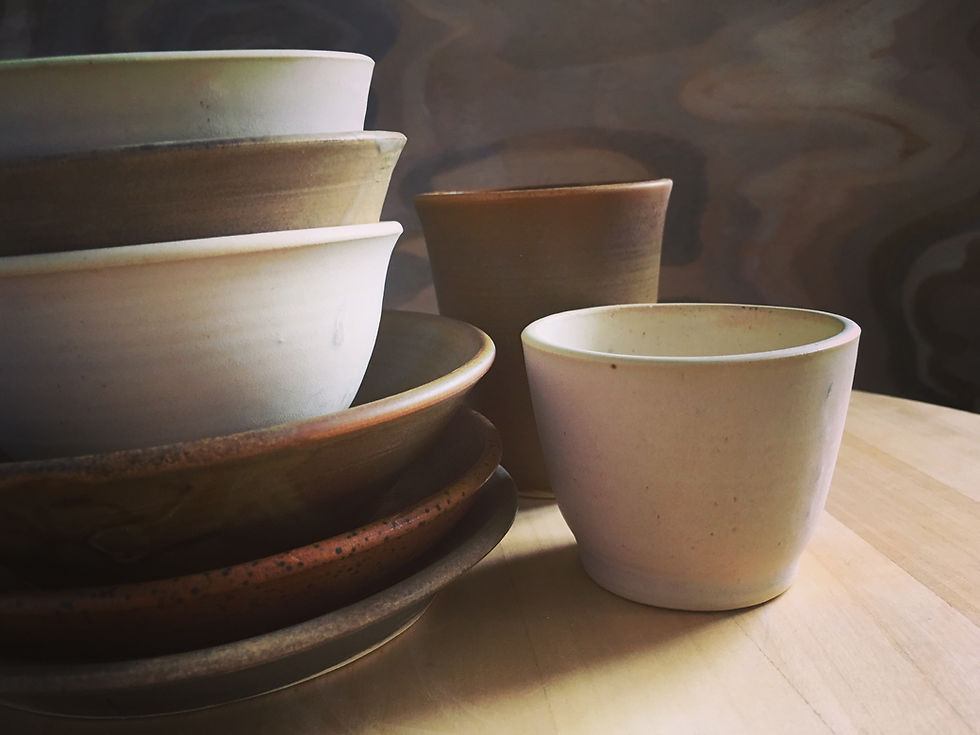
I have to admit, I did not like Orillia when I first moved here. It was a bit of a culture shock after living in Vancouver where the rat race never stops. I had a hard time settling into a quieter life. It was not until I started going to the YMCA, volunteering at the library + getting involved with Couchiching Conservancy that I began to uncover what a great community is present in Orillia. I realize that you have to engage in the community if you want a sense of community. Now I am happy to be part of Orillia + call this place home.

3. Why is it important to you to buy, support + shop locally?
Shopping locally is good for the wallet, the community + the environment! Spending money locally is an investment in the community you live in.
When you buy local it is:
Better for the planet - as it reduces the energy + associated CO2 emissions needed to ship + transport goods
Better for your wallet - you avoid paying a premium for items that are out of season or have travelled a long way
Better for your neighbours - shopping in Orillia supports the local economy
Better for you - as it allows you to connect with your own community

4. What have been your biggest challenges so far?
I have moved 9 times in the last 13 years. I am also trying to subscribe to a minimalist lifestyle. Being able to remain mobile is difficult when practicing a craft that requires a lot of heavy equipment. I also care very much about the environment. The things we make are on this planet for a long long time. Archaeologists uncover pottery created in the Hellenistic period. I think about this as I am working. If the piece that I am working on is not as good as I can possibly make it I do not fire it in the kiln. Once it is fired, it is permanent. I am still having a challenging time with this conflict.

5. Where + how would you recommend someone interested in pottery start?
Pottery, like so many handmade artistic processes has an almost impossible task of competing with cheap manufactured goods. Moreover, unlike in other countries such as Korea, China + Japan, pottery is not as highly valued in North America as an art form. Anyone interested in ceramics should try to learn the trade from a living craftsman now. I think you will find that the ceramic community is very much about sharing knowledge. Of course, every potter has their trade secrets, you will never get the recipe to a favourite glaze, but ceramics is a discipline you cannot learn from Youtube. In my experience the potters I worked with were extremely generous with their time + knowledge. Once the knowledge of the craft is gone it is gone.
6. What is your inspiration, what is your process?
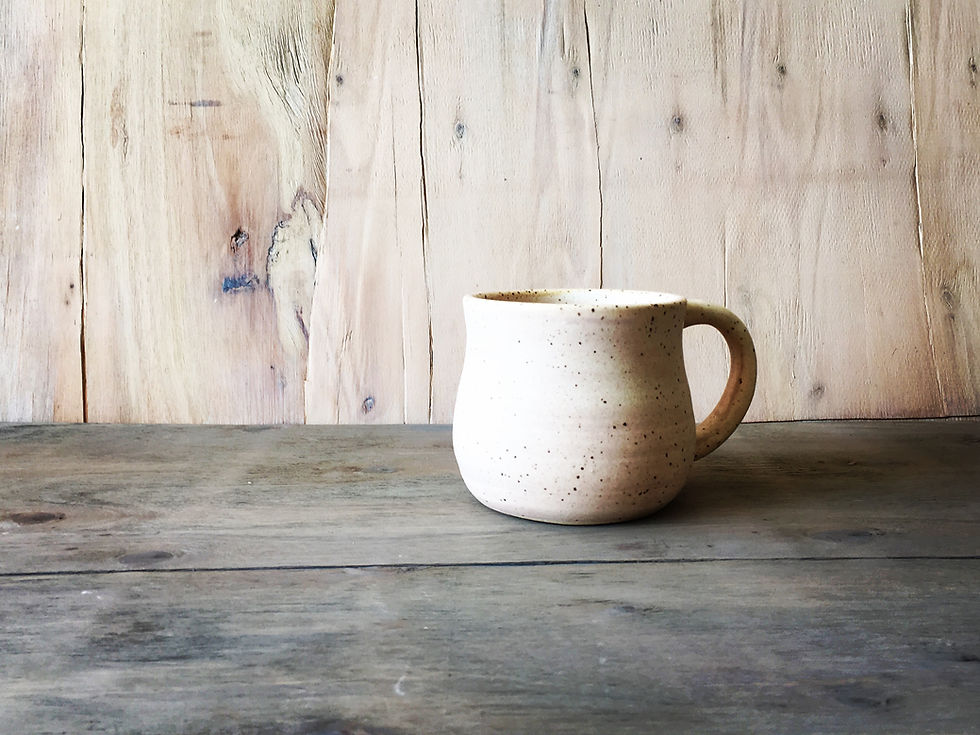
I have never been attracted to bright colours or overworked forms. I love simplicity. I think simplicity is elegance. I want each piece to be something practical. Something you can use all your life + something you never get tired of looking at. To achieve this I really try to find the essence of what a bowl, a plate, a cup is. I am inspired by forms in nature. Some of the most elegant forms in nature, an acorn, a snail shell, a mallard duck are so concise + simple in their design. I try to use the same approach in my work. I edit down the forms until I cannot take anything else away without losing the essence. Then I know the piece is finished.
Thank you so much for sharing Bethany! Come on into the shop to see Bethany's pieces for yourself + you might even end up taking one home...


Comments